Illegal Cannabis Extraction Labs Are Killing Workers. The Industry Stays Quiet
Illegal cannabis extraction labs are killing workers due to dangerous conditions, fueled by the cost disparity between legal and black markets; the legal industry remains quiet, fearing increased regulation.
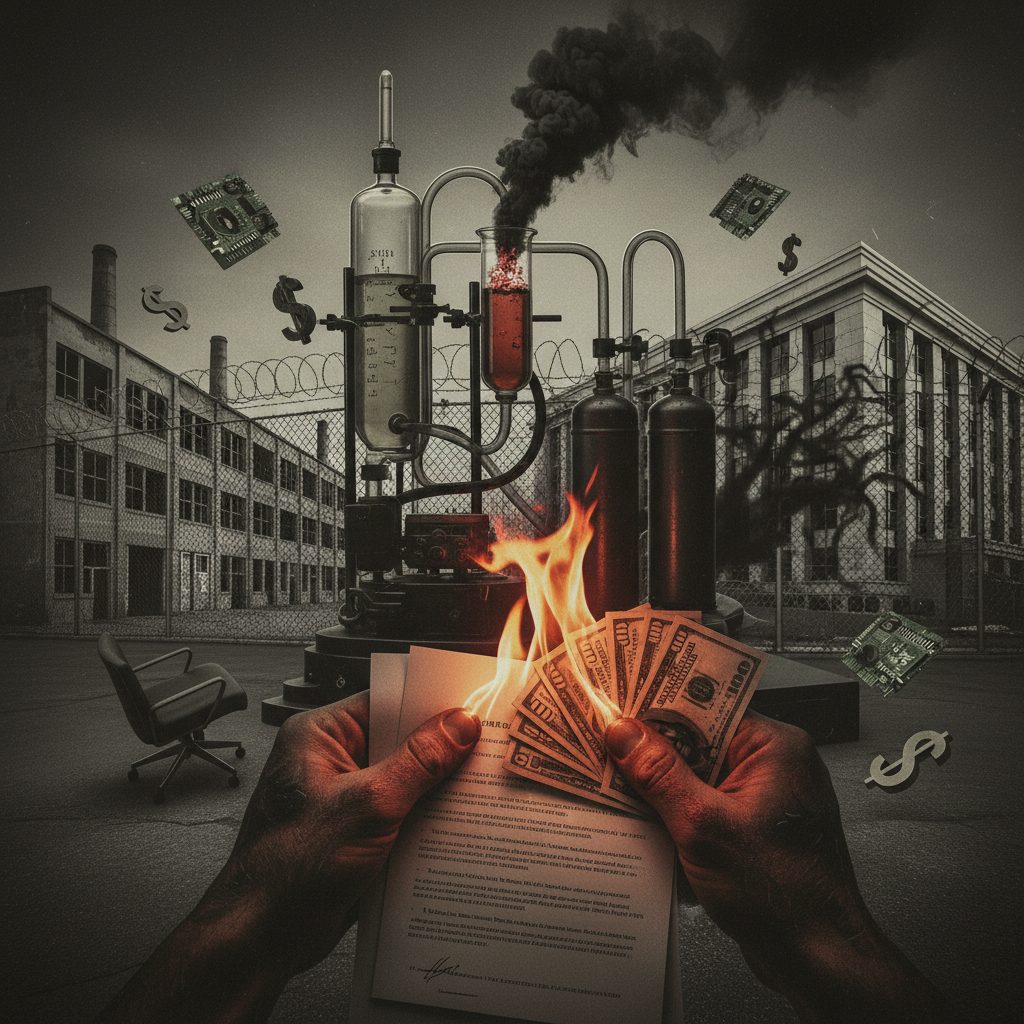
The fire started in a warehouse in Irwindale in 2023. Four workers died. Two years later, in a separate facility in South El Monte, a fifth worker died in another explosion at the same operator's underground extraction business. Five people incinerated. Five families. Five funerals. Almost no national press coverage at the time, and almost no industry reckoning since.
In August 2025, the Los Angeles County District Attorney's office announced charges against six people in what the office named Operation Sugar Diamond. Search warrants executed at nine locations had uncovered more than $100 million in illegal cannabis products. The criminal case against the operators is moving forward. The dead workers are not coming back.
This is the story of how unpermitted cannabis extraction is killing workers, why it persists alongside legal cannabis, and why the legal cannabis industry has structural reasons to stay quiet about it.
What Cannabis Extraction Actually Involves
To understand why illegal extraction labs explode, you need to understand what the work entails.
Cannabis extraction is the process of separating cannabinoids and terpenes from raw plant material to produce concentrates — wax, shatter, distillate, vape oil, and similar products. Extraction methods include CO2, ethanol, hydrocarbon (butane, propane, hexane), and various solventless approaches.
Hydrocarbon extraction, which produces the highest-yield concentrates that command the highest commercial prices, requires substantial volumes of flammable solvent processed through closed-loop systems. Done properly in regulated facilities with appropriate ventilation, fire suppression, electrical grounding, and trained operators, hydrocarbon extraction is dangerous but manageable.
Done in unpermitted facilities — warehouses, garages, residential properties, abandoned commercial buildings — without proper engineering, ventilation, or safety systems, hydrocarbon extraction is a fuel-air bomb waiting for an ignition source. A static spark. A pilot light. A worker's cell phone. The ignition can come from anywhere. When it comes, the consequences are catastrophic.
The Irwindale warehouse fire in 2023 and the South El Monte facility fire in 2024 were both, by all available evidence, hydrocarbon extraction operations gone wrong. The workers killed were not the operators. They were workers — often immigrants, often paid in cash, often without documentation that would have allowed them to work in regulated facilities.
Why Illegal Extraction Persists in Legal Cannabis States
California legalized recreational cannabis in 2016. By 2025, the state had a substantial regulated cannabis industry generating billions in annual revenue. It also had a substantial illegal cannabis industry that, by many estimates, exceeded the legal industry by volume. Operation Sugar Diamond's $100 million seizure represents one operator. Multiply that across the operators who haven't been caught.
The persistence of illegal extraction in legal states is not a regulatory mystery. It is a predictable consequence of the cost structure of legal compliance.
A licensed cannabis extraction facility in California operates under several layers of regulatory oversight. Building code compliance for hazardous materials processing, fire department inspections, OSHA workplace safety requirements, state cannabis licensing fees, local permitting, environmental compliance. The combined upfront and ongoing compliance costs run into the millions of dollars before a single product is sold.
Once operating, the facility's products are subject to state taxes (cultivation tax until 2022, excise tax, sales tax), distribution markups required by California's three-tier system, retail markups, and the operating costs of the licensed retail that actually sells to consumers. The end-of-chain price to a consumer for a California-legal cannabis concentrate is often 3–5 times the equivalent illegal-market price.
Illegal extraction operates without any of those costs. The product reaches consumers — through illegal dispensaries, through online ordering, through informal distribution networks — at prices the legal industry cannot match. The market for cheap cannabis concentrate exists, the demand is substantial, and the illegal supply chain that meets that demand requires extraction labs.
The labs require workers. The workers, in unpermitted operations, work in conditions that occasionally kill them.
Operation Sugar Diamond: What the LA District Attorney Found
The LA District Attorney's August 2025 announcement of Operation Sugar Diamond charges named six defendants and described a multi-agency investigation into an illegal cannabis extraction business connected to the deaths of five workers across two explosions.
The search warrants executed across nine locations — warehouses, residential properties, vehicles — uncovered more than $100 million in illegal cannabis products. The scale of the operation indicates an industrial-grade illegal supply chain, not a small-time operation.
The six defendants face charges that include manslaughter related to the worker deaths, illegal cannabis manufacturing, environmental violations related to the extraction operations, and various conspiracy charges. The criminal case is ongoing.
What the case has revealed publicly so far suggests a sophisticated operator running multiple unpermitted facilities, employing immigrant workers paid in cash, producing extraction products at industrial scale, and distributing through illegal market channels. The same patterns are visible in other illegal extraction operations that law enforcement has investigated nationally.
The Legal Industry's Silence
The cannabis industry's response to Operation Sugar Diamond and the broader illegal extraction problem has been muted. There are reasons.
First, public attention to illegal cannabis operations creates regulatory pressure that affects legal operators too. When state legislatures hear about illegal extraction lab explosions, the policy response often includes additional licensing requirements, additional inspections, additional taxes, and additional restrictions on legal operators. The legal industry's interest in additional regulation is limited.
Second, the workers killed in illegal extraction are typically not the workers the legal cannabis industry represents in its marketing. They are immigrants. They are undocumented. They are people whose deaths do not produce the kind of constituency mobilization that drives industry advocacy.
Third, the operators of illegal extraction businesses sometimes overlap with the supply chains of legal cannabis. Some of the cannabis processed in illegal extraction operations was diverted from legal cultivation. Some of the operators have legal industry connections they do not advertise. Drawing too much attention to the illegal side of the industry risks revealing connections the legal side prefers to keep obscured.
Fourth, the structural causes of illegal extraction's persistence — high taxes, high regulatory costs, restrictive licensing — are exactly the conditions that benefit the established legal MSOs. Lowering legal industry costs to make legal operators more competitive with illegal operators would also lower MSO margins. The MSOs are not advocating for the regulatory changes that would actually reduce illegal market share.
What Workers in Cannabis Extraction Should Know
If you work in cannabis extraction — legal or otherwise — there are facts about your work that you may not have been told.
Hydrocarbon extraction is genuinely dangerous. Even in licensed facilities with engineering controls, the work involves flammable solvent in volumes that can produce serious harm if anything goes wrong. Workers are entitled to training, protective equipment, and safety systems that meet OSHA standards.
You have OSHA rights regardless of your immigration status. OSHA enforces workplace safety standards on all workers, regardless of documentation. Reporting unsafe conditions to OSHA does not trigger immigration enforcement. The legal protection of workplace safety reporting is intentional and is meant to allow undocumented workers to protect themselves.
You have workers' compensation rights regardless of your immigration status. California, and most other states with workers' compensation systems, provide coverage to injured workers regardless of immigration status. Employers who tell you otherwise are lying.
Cash payment is a red flag. Employers who pay you in cash are often not paying workers' compensation insurance, are not withholding required taxes, and are not maintaining the records that would protect you if you are injured. Cash payment is often a marker of operations that are skirting other regulatory requirements.
Lack of safety equipment is not normal. If you are working with flammable solvents without ventilation, without grounding, without appropriate personal protective equipment, the working conditions are illegal under federal law. You have the right to refuse unsafe work and to report the conditions.
The legal extraction industry pays better and is safer. If you have extraction skills, the legal industry pays meaningful wages, provides benefits, and operates under safety standards. The barriers to entry are documentation requirements that may exclude undocumented workers, but for workers who can clear that bar, the legal industry is a substantially better option.
What Consumers Should Know
The cannabis concentrates available at unlicensed dispensaries and through informal distribution channels are produced in operations that have killed workers. That is a fact about the supply chain that consumers may consider when making purchasing decisions.
Concentrate from unknown sources may be unsafe in multiple ways. Beyond the worker deaths the operations have caused, the products themselves may contain residual solvents, pesticides, heavy metals, or other contaminants that licensed product testing would have caught. The price differential between legal and illegal concentrate reflects, in part, the absence of safety testing.
Vape cartridges from unlicensed sources are particularly suspect. The 2019–2020 EVALI lung injury crisis was substantially driven by illegal-market vape cartridges containing vitamin E acetate as a thickening agent. The crisis killed dozens and hospitalized thousands. The pattern of injury continues in some markets.
Buying from licensed dispensaries supports the workers in licensed extraction operations. The legal industry's workers operate in safer conditions, with workers' compensation coverage, with OSHA protections, with healthcare benefits in some operations. Consumer purchasing decisions affect which operations survive.
What Has to Change
The illegal extraction problem will not be solved by enforcement alone. Operation Sugar Diamond is one case. Dozens of similar operations exist across legal cannabis states. Enforcement against individual operators will continue, but new operators will replace them as long as the underlying market conditions persist.
The structural changes that would reduce illegal extraction's market share include:
Lower regulatory and tax costs on legal cannabis to narrow the price differential that gives illegal operators their competitive advantage. California's cannabis taxation has been the subject of repeated legislative discussion, with proposals to reduce excise taxes and eliminate cultivation taxes. Implementation has been politically contested.
Expanded retail licensing in jurisdictions where local control has resulted in retail bans across most of the state. Illegal operations fill the gap when legal access is unavailable.
Workplace safety enforcement against extraction operations regardless of permit status. OSHA has authority to inspect and fine employers operating unsafely. Active enforcement against illegal extraction operations would impose costs that change the economics of the operations.
Federal cannabis policy reform that would allow legal cannabis to operate under federal regulatory frameworks (FDA, OSHA, EPA, ATF for hazardous materials), reducing the legal industry's compliance complexity and tax burden.
Consumer education about the supply chain implications of purchasing from licensed versus unlicensed sources. Most consumers of illegal cannabis products do not know the operations that produced their products. Information could change purchasing behavior.
Worker organizing in extraction operations that includes both legal and illegal workforce. The industry-specific knowledge of extraction workers — many of whom move between legal and illegal operations over the course of their careers — is a resource for both safety advocacy and structural reform.
The Names That Should Be Remembered
The five workers killed in the Irwindale and South El Monte explosions are not widely known by name. They were workers in an industry that did not officially recognize their labor. The DA's office has identified them as part of the Operation Sugar Diamond case, but the public identification has been limited.
A cannabis industry that took the worker deaths seriously would name them. Would memorialize them. Would build worker safety standards around the lessons of how they died. Would invest in the legal extraction operations that could have employed them safely.
That industry has not emerged. The legal cannabis industry as currently constituted treats illegal extraction worker deaths as someone else's problem. The dead workers were not their employees. The illegal operations are not their facilities. The market dynamics that produced the conditions for the deaths are dynamics they benefit from.
That is an honest description of where the industry is. It is also a description that, if widely understood, might change.
The five workers' deaths were preventable. The conditions that produced them are documented. The structural changes that would prevent the next deaths are known. What is missing is the political and industry will to make those changes.
That absence is its own kind of choice.
Cannabis.exposed covers cannabis worker safety, illegal market dynamics, and the structural failures of cannabis legalization. If you have direct knowledge of unsafe extraction operations, contact our editorial team confidentially.
Internal links:
- The Cannabis Dispensary Robbery Crisis →
- Cannabis Worker Exploitation: Wages, Hours, and the Lawsuits Piling Up →
- The Weed Trap: How Legal Cannabis Recreated the Drug War →
Named in this story?
We publish responses verbatim from anyone named here. Submit on the record or anonymously — legal reviews every reply, then it appears on this page next to the original reporting.
File a Response